
jump back to top
de | en
Contact
  • more THI pages
  • semester dates
  • Moodle
  • PRIMUSS Application portal
  • PRIMUSS student's portal
  • Curriculum
  • Webmail
  • Student Council website
  • more THI pages
  • semester dates
  • Moodle
  • PRIMUSS Application portal
  • PRIMUSS student's portal
  • Curriculum
  • Webmail
  • Student Council website
Contact
de | en
Home
  • University
    • General contact and directions
      • Contact options for students
      • Contact forms
      • THI Main campus, CARISSMA, Research, Lifelong Learning
      • Location Stauffenbergstraße
      • Location CARISSMA Outdoor Test Facility
      • Location Campus Neuburg/Donau
      • Öffnungszeiten
    • News
      • Press Releases
    • University Profile
      • Profile and Strategy
      • Facts and Figures
      • Mission Statements
      • Campus grounds in Ingolstadt and Neuburg
      • Milestones
      • Partners and Sponsors
        • Association of friends of the THI
        • Association for international relations
      • University Management
        • Climate Action and Sustainability Management
        • Dept. for Communcation, Press, Media
        • Legal department
        • Strategy and Quality
        • Event Management
        • Service Center Study Affairs
        • Career Service & Student Counselling
        • International Office
        • Women’s Representatives
        • Special functions, counselling and support
      • University Boards and Organisation
        • University Board
        • University Council
        • Senate
        • Students' Council
    • Events
      • Akademische Feier - Graduation ceremony
      • CONTACT: The career fair
      • ON Campus Festival
    • Quality management
      • Understanding QM
  • Faculties
    • Faculties
    • Faculty of Mechanical Engineering
      • News and Events
      • About us
        • Dean's Office
        • Professors of the Faculty
      • Degree Programmes Mechanical Engineering
      • Areas of Expertise & Research
        • Link to Institute of new Energy-Systems
        • Projects in Aeronautical Engineering
        • Acoustics
        • Materials Science
      • Laboratories
      • International
    • Faculty of Engineering and Management
      • News and Events
      • Team
        • Professors and Teaching Staff
      • Degree Programmes Engineering and Management
      • Projects
      • Laboratories
        • Physics laboratory
        • Laboratory for production now and product development
        • Technical Design Laboratory
        • Production Engineering Laboratory
        • Laboratory for welding and cutting technology
      • Expertise & Research Fields
        • Analysis of and Advice on Technical Claims
        • Bavarian Foresight Institute
        • Entrepreneurship and Innovation Management
        • Production Engineering
        • Business Process Management
        • Industry 4.0 and Digitalization of Production
        • AI Applications in Innov. Production & Logistics Systems
        • KI-Based Optimization in the Automobile Production
        • Production and Assembly Systems
        • Statistical Modelling and Machine Learning in Engineering
        • Engineering Procurement
      • International Students
    • Faculty Electrical Engineering & Information Technology
      • News
      • Team
        • Professors and Teaching Staff
      • Fields of Competency and Research
      • Degree Programmes
      • Laboratories
    • Faculty of Computer Science
      • News and Events
      • About us
        • Professors at the Faculty of Computer Science THI
        • Open positions as adjunct lecturers
      • Our professors
      • Degree programmes Computer Science
      • Laboratories
        • Laboratory Autonomous Vehicles
        • Lab for Embedded Systems
        • Laboratory Digital Medicine
        • Laboratory Aircraft Electronics and Computer Science
        • Laboratory Hexapod test bench
        • Laboratory Computer Networks
        • Laboratory User Experience Design
        • Laboratory Virtual Reality and Simulation
      • Joining as a student from abroad?
    • Faculty of Sustainable Infrastructure
      • News
      • About us
        • Open positions as adjunct lecturers
      • Laboratory
      • Degree programmes-NI
      • Excursions
      • Dual Studies
      • Campus Neuburg
        • Campus Facilities
        • Neuburg - city and region
    • THI Business School
      • Vision and Mission
      • Studying at THI Business School in Ingolstadt
      • Degree Programs Business School
      • Business School International
      • Areas of Expertise
      • Dual studies
      • Facts and Figures
      • Sustainability at THI Business School
      • About us
        • Dean's Office
        • Professors of the THI Business School
        • Research Assistants
        • Lecturer
        • Visiting professors
        • Advisory Council
        • We are hiring: Lecturers
      • News and Events
  • Studies
    • Semester dates
    • Studying at THI
      • Engineering & Innovation
      • Business and Management
      • Digital Worlds
      • Life Sciences | THI
      • People & Environment
    • Degree programmes
      • Bachelor study courses
      • Master Study Courses
      • Dual Studies
      • Virtual University of Bavaria (vhb)
    • THI Counselling Services
      • Counselling for prospective students
        • Events Student Counselling
      • Counselling for students
        • Student Counselling
        • Leave of absence from studies
        • Psychological counselling
        • Social counselling
      • Studying with children and maternity protection
      • Studying with a Disability or Chronic Illness
    • Application
      • Bachelor Application
      • Master Application
      • Bachelor application from abroad
      • Masterapplication from abroad
      • Masters and Qualified Professionals
      • Admission and Enrollment
      • PRIMUSS student´s portal
    • Financial Assistance
      • Tuition fees for international students
    • Internships
    • Examination
    • Language Center
      • Course Offerings at the Language Center
      • Further language acquisition options
    • Startup Center
    • Going abroad during your studies
      • Erasmus+ Programme
        • Funding Rates Erasmus+
        • Staff mobility
        • Outgoing Student Mobility
      • Study abroad
        • Timetable Semester Abroad
        • Step 1: Choosing a partner university
        • Step 2: Applying at THI
        • Step 3: Applying at the partner university
        • Funding & scholarships
        • Step 5: Learning Agreement
        • Step 6: After your return
        • Double Degrees
      • Internship
        • Step 1: General Conditions
        • Step 2: Motivation, Goals
        • Step 3: Finding an Internship
        • Step 4: Application
        • Step 5: I Have Found an Internship - Next Steps
        • Step 6: Funding
        • Step 6: After the Internship
      • Short term and Summer/Winter Schools
      • Freemover
    • Exchange Students
    • International degree students
      • Practical Information for Internationals
      • Arrival Form
      • Tuition fees
      • SHIFT - The Strategic Hub for International Future Talent
      • DAAD Study Visit for Groups @THI
    • Career Service for students
    • Campus and student life
      • Student clubs and initiatives at THI
        • consult.IN e. V.
        • Enactus Ingolstadt e.V.
        • Hochschulgaming Ingolstadt e.V.
        • International Culture Club
        • Catholic University Community
        • Neuland Ingolstadt e. V.
        • NEWEXIST - The start-up initiative
        • Our Future e.V.
        • Schanzer Racing Electric e.V.
        • Studenten bilden Schüler e. V.
        • Studentischer Börsenclub Ingolstadt
        • Students' Life
        • UNICEF University Group
      • Accommodation
      • Student discounts
      • Public transport, parking and more
      • Mentoring and Buddy Programme
  • Research
    • Research at THI
      • AININ Artificial Intelligence Network
      • Project 5GoIng
      • Research competencies
        • Materials and Surface Technology
        • Start-ups
      • Your Career in Research
    • Doctoral School
      • Pursuing a Doctorate at THI
      • Doctoral Centre Engineering Sciences
      • Doctoral Centre AI/Computer Science
      • Cooperative Doctorate
      • THI Doctoral Centre
      • News & Events
    • Transfer at THI
      • Projects and Initiatives
        • ACE²-EU
        • Mensch in Bewegung
        • Servus MINT
      • Fields of activity
      • Research and Transfer Events
      • CALAI - Center for Latin America
      • SAFIR
        • Intensification Phase
        • Set-up Phase
        • About us
        • SAFIR News alt
    • CARISSMA
      • Philosophy
        • Über uns
        • Career
        • Team
      • News & Press
      • C-IAD
        • C-IAD
        • Safeguarding automated driving functions using mixed-real
        • Ergonomics and Human Factors
        • Interventions in the vehicle dynamics for autonomous driv
        • Safeguarding functions and HW using HIL for automated dri
        • Machine Learning for Vehicle Safety Systems
        • Localization and Exteroceptive Sensors
        • Sensor simulation with a focus on weather conditions
        • Simulation-based stochastic efficacy analysis
        • Simulation based validation of vehicle safety functions
      • C-ISAFE
        • C-ISAFE
        • Environmental perception
        • Unavoidableness and crash severity
        • Safety in bad weather
        • Pedestrian safety
        • Safeguarding automated driving
        • Methods of passive safety
        • Safety of new mobility concepts
        • Vehicle Interior Occupant Monitoring
      • C-ECOS
        • C-ECOS
        • Team
        • Karriere
        • Car2X and Cyber-Physical Systems
        • Robustness and Durability in Electric Mobility
        • Strukturelle Integrität
        • Medical and AI Security
        • Software and System Security
        • Innovative drive systems and commercial vehicle technolog
        • Cooperative Intelligent Transport Systems
        • Security in Mobility
        • Safe electromobility and accident analysis
        • Lecture Series on Electromobility
      • Laboratories
        • Innovation Centre for Digital Vehicle Forensics
        • HyTACC – Hydrogen Testing, Application & Certif. Center
        • Abuse Attempts
        • Car2X Laboratory
        • [Translate to English:] Labor für Nachhaltige Energiesyst
        • Driving Simulator (Hexapod)
        • Drop Tower
        • Free driving systems for automated driving tests
        • Hil Laboratory
        • Driving Experience Lab
        • Indoor test facility
        • Outdoor Test Facility
        • Mobile robots
        • Real Lab High Definition Testbed
        • Research vehicles
        • Security in Mobility
        • Battery Lab
        • Simulation Laboratory
        • Targets
        • Twizy (ANTON)
    • AImotion - AI Mobility Node
      • Research@AImotion
        • Research@AImotion
        • Topics
      • People@AImotion
      • Career@AImotion
      • About@AImotion
        • About@AImotion
      • Events@AImotion
      • Transfer@AImotion
        • AI Transfer Center IN
    • Technology Transfer Center Unmanned Aerial Systems
      • Collaboration with the TTZ
      • Research at TTZ
        • Science on Wings – Integrated Flying Testbed
        • Projects TTZ
        • Research Areas
        • Research institution
        • Publications
      • Events at TTZ
      • Your career at TTZ
      • News TTZ
      • Team TTZ
    • Bavarian Foresight Institute
      • Research focus of the Bavarian Foresight-Institute
      • Publications of the Bavarian Foresight Institute
      • Videos and podcasts with the Bavarian Foresight Institute
      • Team of the Bavarian Foresight-Institute
    • ForTraNN – Sustainability Research and Transfer Center
      • Scientific transfer conference "Die Große Transformation"
      • Research at ForTraNN
        • Project SustainED
        • Projekt SmartArea
        • Project BigTrans
    • Fraunhofer Application Center
    • Institute of Innovative Mobility (IIMo)
      • Research areas
        • Electromobility and Learning Systems
        • Microelectronics Packaging
        • Engines and Powertrains
        • Sensor technology and sensor data fusion
      • Teaching and research laboratories
      • Jobs and offers for students
    • Institute of new Energy Systems (InES)
      • Field of Research
        • Industrial Energy Systems
        • Energy System Technology
        • Domestic Energy Systems
        • Technology Transfer & International Project Management
        • International Energy Research
      • Laboratories
      • Know-How Transfer
        • Opti-WP
        • STRAWBERRIES
        • ÖkoFlussPlan
      • International Activities
        • Newsletter-Archiv
      • Team InES
      • Career opportunities InES
    • Beyond Validation AI
    • Distinguished Professorship
    • Research and transfer
      • For Researcher
        • National funding programmes
        • European Union
        • Foundations
        • Internationalisation
        • Start-up support
      • For Companies
      • Research Projects
      • About us
  • Lifelong Learning
    • Institute for Lifelong Learning
      • Study programmes
        • Extra-occupational programmes
        • Bachelor programmes for professionals
        • Master programmes for professionals
      • This is Campus for Lifelong Learning
        • About us
  • Service
    • Our services for you
    • University Library
      • Apply for a Library Card
      • Order Suggestion
      • Funding Application for Open Access Publications at THI
      • Public holidays
      • Library Catalogue für THI Members
      • Library Catalogue for External Users
      • Databases
        • Terms of Use and Access Requirements
      • Service
        • Guideline
      • Teaching Library
        • Students
        • Lecturers
        • Researchers
        • THI staff
        • Services for schools
        • AI & Research
      • Research and Publication Service
      • Contact
    • IT Service
      • Software
        • Citavi - literature management
        • MATLAB
        • MSDNAA / dreamspark
        • Office 365 ProPlus free of charge for students
      • User account
        • Guidelines for Use
        • Password hints
        • Student ID card
      • E-mail / exchange
      • Printing
      • VPN
      • WIFI
    • Gender and Diversity
      • Diversity Day
      • Services offered
      • Working with Children
      • Childcare
      • Emergency numbers outside of THI
      • Guideline against discrimination
    • Talent Promotion/Scholarships
    • Mentoring for female students
    • Alumni
    • Sports
    • Marketplace
    • Merchandising
  • Career
    • Career paths
      • Upgrade yourself to Prof!
      • Apprentices
    • About us
    • Job offers
    • Career information and advice
  • Campus Neuburg
    • semester dates
    • Moodle
    • PRIMUSS Application portal
    • PRIMUSS student's portal
    • Curriculum
    • Webmail
    • Student Council website
Contact
de | en

Aircraft and Vehicle Informatics (B. Sc.)

[Translate to English:] Interaktion Drohnen und FahrzeugeApplication period for the 2027/28 winter semester: 2 May to 15 July 2027

The Aircraft and Vehicle Informatics programme brings together computer science and the requirements of aircraft and vehicles.
New developments in aircraft and vehicles, such as electric mobility, autonomous driving, air taxis and delivery services using drones, would be inconceivable without software.
That is why the programme focuses on the development of functions and the implementation of new mobility-related business models with a focus on aircraft and vehicles.
The programme teaches the techniques for designing and mastering complex and networked software systems for aircraft and vehicles and the necessary infrastructure. 

Please note: This programme is taught in German. 



Bachelor of Science (B. Sc.)

7 Semesters

Winter

yes

Yes

German


Contents

In the first two semesters, the bachelor’s degree course Aircraft and Vehicle Informatics introduces students to the fundamentals of information technology such as programming, software engineering, computer architecture and operating systems. Building on this, the course then goes on to cover topics such as microcomputer technology, embedded systems, real-time systems and safety-critical systems. In parallel lectures and seminars, the two areas of automotive and avionics focus on applications and specific skills that are typical of either automobiles/motorcycles (automotive) or aircraft/helicopters/drones (avionics).
In all elements of the course, THI lecturers always ensure teaching is heavily geared towards practical applications.
An extensive catalogue of optional compulsory subjects such as robotics, mobile communication and cryptology allows students to explore these more specialised areas in greater depth.
The course is modular in structure, with a module comprising one or more subjects. The individual subjects are examined at the end of the relevant semester. Students are awarded credit points to measure their academic progress. Credit points can also be acquired at partner universities abroad.

Structure

First study phase

The core study phase comprises two theory semesters. Since the core study phase is closely dovetailed with the degree course in Computer Science, students can switch between these degree courses during this phase.

Second study phase

The second stage comprises four theoretical semesters and one practical semester (generally the fifth), comprising in-depth study of a number of subjects. When it comes to specialising, students choose either the automotive field or avionics. The fifth semester is a practical semester.
The second stage of the degree programme concludes with the bachelor's thesis. 

Curriculum

1. Semester

Mathematische Grundlagen 1
6 ECTS

This module provides the mathematical foundations for computer science and IT security. Topics include propositional and predicate logic, set theory, Boolean algebra, binary words, and logic circuits, as well as the fundamentals of probability theory. Students also study sequences and series, complex numbers, matrices, systems of linear equations, and the basic concepts of differential and integral calculus.

Grundlagen der Programmierung 1
7 ECTS

This module introduces the fundamentals of imperative programming and software development using the C programming language. Topics include data types, control structures, functions, memory management, arrays, pointers, and dynamic data structures. In the lab, students develop an interactive game in a Linux environment while gaining practical experience with development tools, debugging techniques, and structured programming principles.

Einführung in die Informatik 1
5 ECTS

This module introduces the fundamental concepts of computer science and computer architecture. Topics include algorithms, computability, decidability, and complexity theory, as well as the representation of information in digital systems. Students also explore the structure of modern computers, from digital circuits and the von Neumann architecture to advanced concepts such as caching, instruction pipelining, and multi-core processors.

Technische Systeme im Automobil / Flugzeug
5 ECTS

This module introduces the fundamentals of technical systems in automotive and aerospace engineering. Topics include electronic vehicle architectures, sensors, actuators, driver assistance systems, electromobility, and infotainment systems. Students also learn about navigation methods, aircraft instruments, positioning technologies, and the use of airborne sensors, gaining an understanding of their technical and physical principles.

Einführungsprojekt
2 ECTS

This introductory project provides foundational skills for academic work and supports a successful start to the Aviation and Automotive Informatics degree program. Students learn research techniques and information sources, work on subject-specific tasks in teams, and present their results. Team-building activities, a guided campus tour, and workshops on learning strategies and time management further support academic orientation and success.

Englisch
5 ECTS

This module develops English language skills in the context of computer science and information technology. Topics include current IT-related subjects, technical vocabulary, and texts from English-language professional and business media. Students practice grammar, listening comprehension, presentation techniques, and business correspondence. Through presentations and discussions, they strengthen their communication skills for international professional and academic environments.

2. Semester

Mathematische Grundlagen 2
6 ECTS

This module provides advanced mathematical foundations for computer science and engineering applications. Topics include differential and integral calculus, Taylor series, numerical integration, and applied analysis. Students also study algebraic structures, linear transformations, eigenvalues and eigenvectors, matrix diagonalization, modular arithmetic, and combinatorial methods.

Grundlagen der Programmierung 2
7 ECTS

This module introduces the fundamentals of object-oriented programming using C++. Topics include classes and objects, inheritance, polymorphism, templates, exceptions, input/output, threads, and graphical user interfaces. In the lab, students develop a GUI-based application while deepening their understanding of object-oriented concepts, generic programming, and modern software development techniques.

Einführung in die Informatik 2
7 ECTS

This module introduces the fundamentals of microcomputer systems and operating systems. Students learn about the architecture and programming of microcontrollers, memory technologies, bus systems, and low-level software development. The course also covers operating system concepts such as processes, threads, synchronization, memory management, input/output, file systems, and virtualization, highlighting the interaction between hardware and software.

Software-Entwicklungsmethodik
5 ECTS

This module introduces the methods and processes of professional software engineering. Topics include requirements engineering, software quality, implementation, documentation, and software testing. Students learn both traditional and agile development approaches as well as process and maturity models. The course provides competencies for analyzing, developing, quality-assuring, and systematically implementing software projects throughout the entire software lifecycle.

Fahrzeug / Flugzeug Kommunikationssysteme
5 ECTS

This module introduces the fundamentals of communication systems in automotive and aerospace applications. Topics include bus systems, network topologies, communication protocols, and mechanisms for medium access control and collision handling. Students explore widely used standards such as CAN, LIN, FlexRay, Ethernet, ARINC 429, and MIL-STD-1553B. The course also covers physical transmission principles and automotive diagnostic communication.

3. Semester

Angewandte Mathematik
6 ECTS

This module provides mathematical methods for analyzing, modeling, and solving engineering problems. Topics include optimization techniques for multivariable functions, statistical methods for data analysis and interpretation, and the fundamentals of probability theory. Students also learn basic concepts and solution methods for ordinary differential equations, which are widely used to model dynamic systems.

Netzwerke
7 ECTS

This module introduces the fundamentals of modern computer networks and Internet communication. Topics include the structure and operation of networks based on the TCP/IP model, protocols of the application, transport, and network layers, as well as local area networks and physical data transmission. Students gain an understanding of core networking concepts and how information is reliably exchanged across interconnected systems.

Software Management
5 ECTS

This module introduces methods and tools for managing software throughout the entire development lifecycle. Topics include build and version management, continuous integration, software integration, deployment, and DevOps processes. Students learn quality-related requirements, defect management, software documentation, and strategies for software reuse while gaining practical experience with modern software development and management tools.

Software-Design und Datenbanksysteme
7 ECTS

This module introduces the fundamentals of software design and modern database systems. Students learn how to structure complex software systems, transform requirements into architectures, and develop distributed systems. The course also covers data modeling, data integrity, relational databases, SQL, and transaction management. The focus is on creating robust, maintainable, and efficient software and data management solutions.

Integrationsplattform für Automotive Funktionen
5 ECTS

This module introduces modern software platforms for automotive functions. Topics include real-time operating systems, ROS/DDS, embedded Linux, AUTOSAR, virtualization technologies, and over-the-air updates. Students learn how to configure, integrate, and operate software across different platforms. Practical exercises provide hands-on experience with current development processes and technologies used in connected automotive systems.

4. Semester

Architektur verteilter Systeme
5 ECTS

This module introduces the foundations, concepts, and methods of distributed systems. Topics include communication and synchronization between distributed components, modeling approaches, parallel programming, and formal specification languages. Students explore challenges such as consistency, security, fault tolerance, and coordination mechanisms and analyze their implementation in real-world distributed systems.

Intelligente autonome Systeme
5 ECTS

This module introduces the foundations of intelligent and autonomous systems. Topics include artificial intelligence methods, intelligent agents, search strategies, machine learning, and neural networks. Students explore environment perception, data fusion, path planning, and system architectures. Through practical examples, they examine different levels of autonomy and their implementation in modern autonomous systems.

Echtzeit-Systeme
5 ECTS

This module introduces methods for developing and analyzing real-time and cyber-physical systems. Topics include scheduling algorithms, multicore architectures, resource management, verification and simulation techniques, and real-time operating systems. Students learn how to design time-critical applications and evaluate distributed real-time systems regarding functionality, reliability, and timing constraints.

Modellbasierte Softwareentwicklung
7 ECTS

This module introduces model-based methods throughout the software development lifecycle. Topics include requirements engineering, software architectures, software design, model-based testing, and functional safety. Students learn how to describe, analyze, and develop systems using models. The course focuses on quality, traceability, and efficient development processes for complex technical systems.

Cyber Security
5 ECTS

This module introduces cybersecurity concepts and methods for automotive and aerospace systems. Topics include security threats, cryptographic techniques, certificates, secure communication protocols, and security mechanisms for embedded systems. Students learn to identify vulnerabilities, select appropriate protection measures, and evaluate modern security solutions for connected and safety-critical environments.

Fachwissenschaftliches Seminar
3 ECTS

This academic seminar strengthens students’ skills in scientific research, analysis, and professional communication. Students review relevant literature on a selected topic, prepare a scientific presentation, and discuss their findings with peers. In addition, they write a seminar paper that summarizes and critically examines the chosen subject, further developing their academic writing and presentation competencies.

Vorbereitendes Praxisseminar

5. Semester

Praktikum
24 ECTS

The internship semester enables students to apply the knowledge and skills acquired during their studies in a professional environment. Students select a suitable company in Germany or abroad and work on practical tasks using established methods and techniques. They gain insight into organizational processes and professional practices, further develop their technical and personal competencies, and document their experiences in an internship report.

Nachbereitendes Praxisseminar (PLV2)
2 ECTS

This post-internship seminar supports the reflection and evaluation of experiences gained during the internship. Students present their activities and results in short presentations followed by group discussions. The course connects practical experience with academic knowledge, explores effective presentation techniques, and strengthens communication, social, and professional skills through discussions, exercises, and role-playing activities.

Informations- und Medienkompetenz (PLV3)
2 ECTS

This module develops competencies in scientific information retrieval and the professional use of academic resources. Students learn research strategies, the use of scientific databases, library services, standards, and patents. The course also covers academic writing, citation standards, reference management, and the responsible use of AI tools, enabling students to critically evaluate and effectively organize information for research and professional practice.

Kommunikations-und Teamkompetenz (PLV1)
2 ECTS

This module develops communication and teamwork skills for professional environments. Students reflect on their expectations, strengths, and areas for improvement in preparation for their upcoming internship. Through personality assessments, group exercises, and role-playing activities, they learn effective communication and conflict resolution techniques. The course enhances teamwork, self-awareness, and professional behavior in a variety of workplace situations.

6. Semester

Cloud-Architekturen und -Dienste
5 ECTS

This module introduces the fundamentals, architectures, and services of cloud computing. Topics include cloud concepts, virtualization, containerization, infrastructure, management, and access mechanisms. Students explore different cloud architectures and deployment models and evaluate them with respect to cost, scalability, and service quality. The course also covers Service Level Agreements (SLAs) and operational aspects of cloud-based solutions.

Projektmanagement
5 ECTS

This module introduces the methods and tools of traditional and agile project management. Students learn how to plan, manage, and control projects from goal definition through implementation, including resource and risk management. Topics include stakeholder management, effort estimation, project controlling, and agile approaches such as Scrum. Group exercises reinforce the practical application of these methods.

Betriebssicherheit
5 ECTS

This module introduces methods for the development and assurance of safety-critical systems. Topics include reliability and risk analysis, functional safety according to ISO 26262 and IEC 61508, safety assessment, and hardware and software requirements. Students learn techniques such as fault tree analysis, redundancy concepts, coding standards, and process models, applying them to automotive and aerospace systems.

Praktikum Entwicklung von Fahrzeugfunktionen / Praktikum Flugführung
5 ECTS

In this lab course, students develop software solutions for automotive or aerospace systems from requirements analysis to testing. They design software architectures, implement and integrate applications on embedded platforms, and connect them to communication interfaces. Additional topics include flight guidance, navigation, and automation. Students verify system requirements through appropriate testing and validation methods.

Automotive-/Avionik-Projekt
5 ECTS

In this project module, students work in teams on a semester-long project in the fields of automotive engineering or avionics. They follow the complete development process, including analysis, research, selection of methods and tools, implementation, and verification. The course also covers project and configuration management, while the project outcomes are documented in a comprehensive final report.

Grundlagen der Betriebswirtschaft und des Gründertums
5 ECTS

This module introduces the fundamentals of business administration and entrepreneurship. Topics include organization, marketing, finance, accounting, investment analysis, innovation management, and business model development. Students explore entrepreneurship and intrapreneurship concepts and apply them in a startup project by developing product ideas, business models, and marketing strategies.

7. Semester

Fachwissenschaftliche Wahlpflichtmodule
15 ECTS

Seminar Bachelorarbeit
3 ECTS

This seminar systematically prepares students for the completion of their bachelor’s thesis. Topics include academic standards, examination regulations, literature research, and documentation techniques. Students independently select a topic and supervisor, define their research problem, develop an outline and project schedule, and prepare the formal registration of their bachelor’s thesis.

Bachelorarbeit
12 ECTS

The bachelor’s thesis represents the final academic achievement of the degree program. Students independently investigate a subject-specific problem using scientific methods. This includes problem analysis, the selection and implementation of appropriate solution strategies, and the evaluation and documentation of results. The thesis demonstrates the ability to address complex challenges in a structured and scientifically sound manner.


Quick Info

Admission and application
  • Applying for a degree course
    Students may only begin their degree in the winter semester.
  • Registration dates
    Applications for this degree may be submitted through the online application system from May 2 til August 31. Please see our Bachelor application site for details.
  • Admission requirements
    To gain admission to the programme, applicants need one of the following qualifications for university entrance:

    • Abitur (European Baccalaureate, A-Levels, High School Diploma)
    • Fachhochschulreife (Vocational Baccalaureate)
    • Fachgebundene Hochschulreife (Specialised A-Level)


    The following link provides specific information about the application process for admission to the degree programme.

  • Admission requirements for international students
    If you wish to study at a German University, you need a so-called Hochschulzugangsberechtigung (HZB), or higher education entrance qualification. This is a secondary school-leaving certificate that corresponds to the German Abitur and entitles you to study.
    Students from abroad must apply for admission from the university of their choice. For your application, you will require for a Bachelor's degree:

    • a school-leaving certificate (also known as "university entrance qualification", e.g. High School Diploma, Matura, A-Levels, Bachillerato, Atestat, baccalauréat)
      or
    • proof that you have passed the university entrance examination (if required in your home country)

    (Source: German Academic Exchange Service, DAAD, July 2016)

Dual studies or studies with in-depth practical

The dual studies programme enables a combination of practical training elements in a company with the theoretical education provided by the university. There is a choice of either the joint model (academic study + vocational training) or the degree course with vocational experience (academic study + intense practical phases). There is an obvious advantage to students here: practically oriented academic study generally enables a particularly smooth transition from university to the world of work. What is more, the student usually receives financial remuneration from the company concerned.

In the joint model, students may start working at the company several months before the start of the first semester, depending on the company concerned. At the start of the course there is an alternation between theory (during the semester) and practical experience (between semesters and during the practical semesters). In order to embark on a dual studies programme, students have to apply to both a company and to THI (be sure to take note of company application deadlines!).

More info on our dual studies-pages, or check dual cooperation partner companies. Even if no partner company is currently active in this degree programme, you are welcome to contact us.

Job profiles

Upon completion of their studies, our graduates are qualified for software development for safety-related systems, such as aircraft and vehicles, and for the development of functions for digital products and business models for connected mobility.
Thanks to their fundamental training in computer science, all other career paths in computer science are also open to them.

FAQs

What distinguishes aircraft informatics and vehicle informatics from computer science?

In aircraft informatics and vehicle informatics, a direct reference is made to the application in aircraft or vehicles. The selection of subjects is also tailored to aircraft and vehicles.

What do you do later as an aircraft and vehicle computer scientist?

As an aircraft and vehicle computer scientist, you work at the system interface between aircraft developers and software development.

Because of the basic training in computer science, you can of course also work in all areas of software development.

Do I need to know anything special to study aircraft and vehicle informatics

No, you really only need to have an interest in computer science and aircraft or vehicles.

Do I need to study both - aircraft and vehicle?

We offer subjects for both directions, so you can choose depending on your interests. However, you do not have to specialize.

Is there an admission restriction for aircraft and vehicle informatics?

No, there is no admission restriction for an application for the winter semester 2023/2024. Therefore, the extended application period until July 31, 2023 also applies for the winter semester 2023.

Is the study of aircraft and vehicle informatics more theoretical or more practical?

The THI places practical application in the foreground. We always teach the necessary theory in relation to the later application.

Is there also a real airplane at THI?

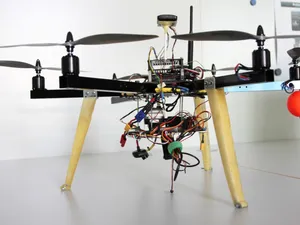
Unfortunately no. Due to space constraints, we don't have a real aircraft at THI. But of course there are plenty of drones and smaller scale aircraft as well as simulators.

Do you have to do an internship for aircraft and vehicle informatics?

There is no mandatory pre-internship for aircraft and vehicle informatics? As in any of our degree programs, an internship semester (usually the 5th semester) is scheduled.

How much computer science is in aircraft/vehicles?

In new airplanes or vehicles almost everything is controlled by software. Even a VW Golf contains 3 times as much software as the most modern aircraft.

The development of such a large amount of software is a great challenge and offers many job opportunities for graduates.

Is there a possibility to do a semester abroad during the studies of aircraft and vehicle informatics?

Of course. A semester abroad offers exciting insights and you get to know other approaches. THI supports you in planning and carrying out a semester abroad.

What career opportunities are there after graduation?

Graduates of a bachelor's degree program in Flight and Vehicle Information Systems have a wide range of career options. They can work in the aerospace industry, automotive industry, with suppliers of vehicle and aircraft components, in software development, in the field of autonomous vehicles or in research and development institutions.

Can I also study a master's degree with it?

Yes, at THI all computer science masters fit. Transferring to other universities and colleges is possible with our Bachelor's degree.

Contact options for prospective students

Apply online

Programme director and academic advisor

Prof. Dr. Andreas Frey
Vice Dean of the Faculty of Computer Science
Prof. Dr. Andreas Frey
Phone: +49 841 9348-2330
Room: L208
E-Mail: Andreas.Frey@thi.de

Module Handbook

The module handbook contains information on prerequisites, contents, learning outcomes, ECTS points, duration, work load, literature, references of the offered modules and lectures. 

Module handbook Aircraft and Vehicle Informatics


Study and Examination Regulations

Study and examination regulations (SPO) deal with judicial matters concerning your study course. Please turn to the pages of the legal department for Statutes of this course.

For any questions on requirements, exams regulations and more, please turn to the Service Center Study Affairs.

Links

Semester dates


Accreditation

Laboratories

We attach great importance to practical education; the practical training given in our technically well-equipped laboratories is an excellent complement to theoretical teaching.

Picture of a drone in the laboratory

Labor Fluggeräteelektronik und -informatik

Labor Virtual Reality und Simulation (copy 1)

Loader
Technische Hochschule Ingolstadt
  • Esplanade 10
    85049 Ingolstadt
  • Phone: +49 841 9348-0
  • Mail: info@thi.de

Legal notes

  • Imprint
  • Data protection

Any Questions?

  • Service Center Study Affairs
  • Counselling for prospective students
  • International Office

General information

  • General contact and directions
  • Öffnungszeiten
  • Marketplace
  • Website Feedback
[Translate to English:] Logo Akkreditierungsrat: Systemakkreditiert